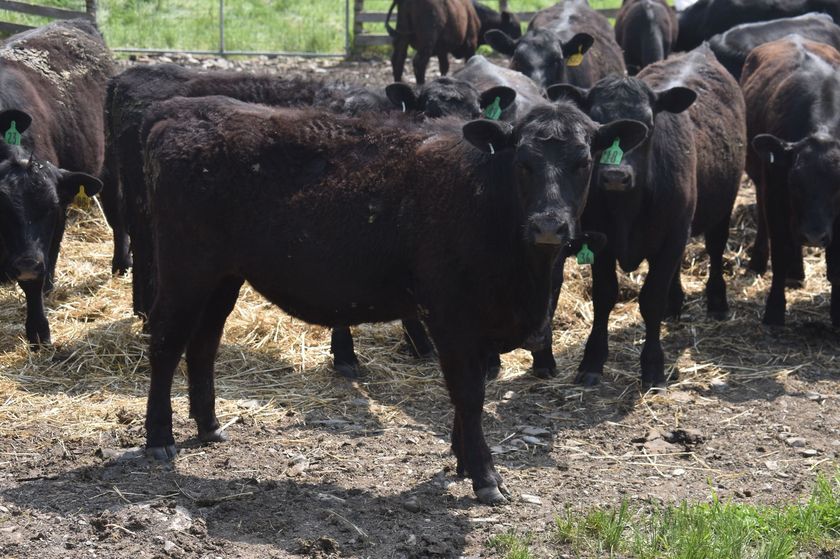
Our Beef
Raised on grass. Handled calmly. Cut for you.
Ruminants were built to turn grass and legumes into everything they need. Our whole job is to keep good forage in front of them and stay out of the way.
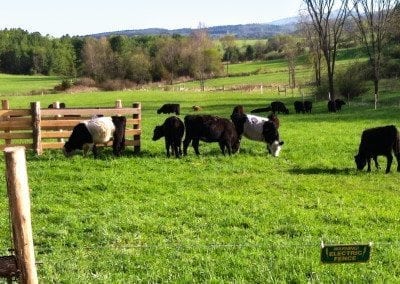
Always on pasture
From April until your delivery in the fall, our animals are on lush green pasture 24 hours a day. Not a dry lot with a view of a field — actual grazing, every day of the season.
No hormones, no antibiotics
Our cattle stay healthy because they are not stressed and not crowded. Low-stress handling and clean pasture do the work that a feedlot needs pharmaceuticals for.
Rotational grazing
The herd moves paddock to paddock so each field rests two to four weeks before it is grazed again. Paddocks are clipped behind the herd to control weeds and stimulate regrowth.
Single-animal ground beef
The butcher cleans the grinder between every side. Your burger comes from your animal — not from a vat holding trim from a dozen carcasses.
No mystery beef
What “the mix” actually is
After the premium cuts come off a carcass, the remaining trim goes into large vats holding meat from roughly a dozen to fifteen animals at a time. That is standard practice — for conventional beef, and for most retail grass-fed and organic beef too.
Eat ground beef twenty times a year from a supermarket or a restaurant and you have eaten beef from something on the order of three hundred animals. We think that is a strange way to feed a family.
Everything you get from us comes from one side of beef. Nothing blended in, nothing from anywhere else.
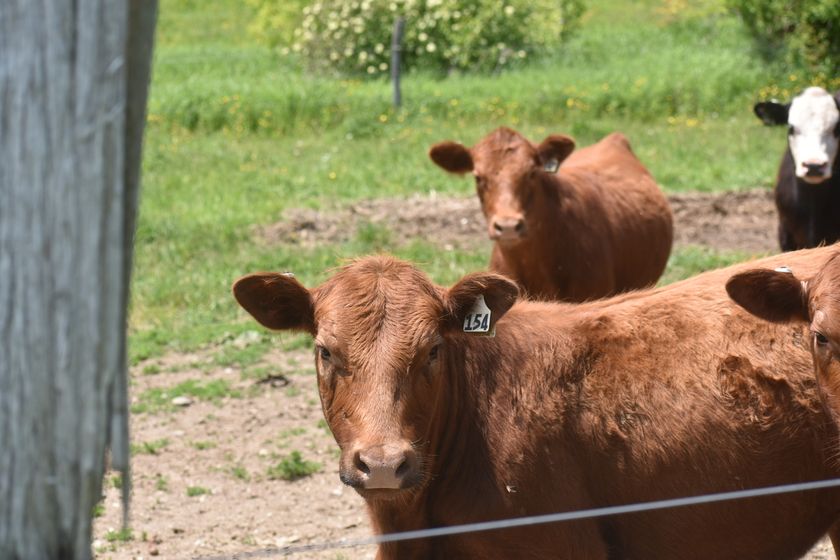
By the numbers
What good pasture does
- On pasture in season
- 24/7
- Rest between grazings
- 2–4 wk
- Minimum hang before cutting
- 7 days
Every side hangs a minimum of seven days in the cooler before it is cut, so natural enzymes can firm and tenderize the meat. Most supermarket beef is broken down immediately after slaughter and boxed for shipping instead. It is not the same result.
Late season
The August routine
Starting around the first of August we visit each group daily with a small treat — beet or citrus pulp with molasses, about 5 to 8 percent of daily dry matter intake. These are fiber by-products, not grains, and the rumen is designed to digest fiber.
It serves two purposes. Late-season grasses pull their sugars back into the roots, so this replaces some of what the marbling needs. And daily, calm human contact keeps the animals settled. Stress at handling means adrenaline, and adrenaline makes tough beef.
On labels
Natural, inspected, and honest
Our beef is processed under USDA inspection, as stamped on every package, but it is not USDA graded. Quality grading — Prime, Choice, Select — is a separate, voluntary USDA program based principally on maturity and marbling, and custom-cut beef sold direct from a farm is typically ungraded. We make no grade claims; we would rather be judged by what comes out of your freezer.
Our burger carries enough marbling for real flavor — flavor that comes straight from the forage the animals graze.