How It Works
From reservation to freezer
Buying beef by the side is not complicated, but it is unfamiliar. Here is the whole process, including the part everyone asks about: hanging weight.
Two minutes
Watch how it works
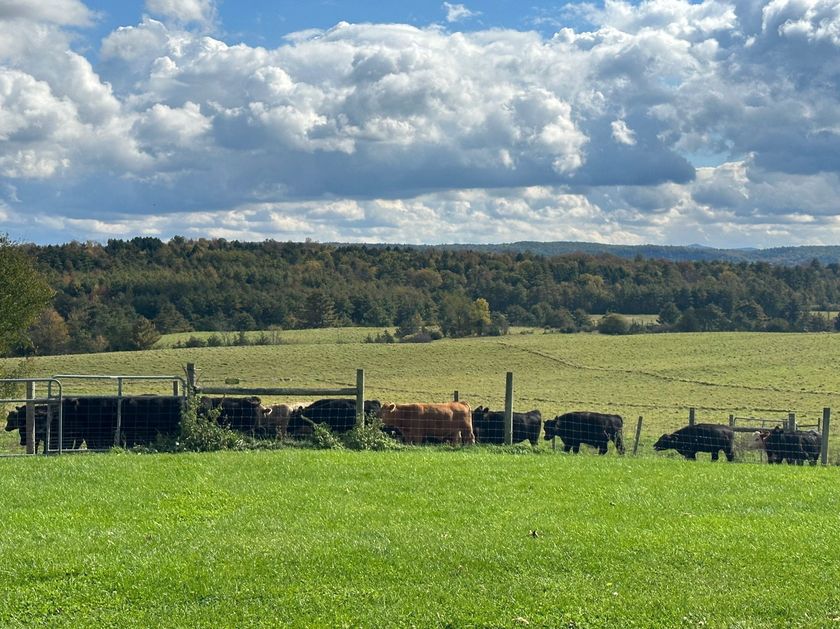
The whole process, from pasture to your freezer, explained from the farm.
Choose your format
Sides, quarters, and bulk ground
A side
Half of one animal
typically 350-450 lb hanging
One hind quarter (the round), one front quarter (the chuck), one flank, one tenderloin, and one complete rib. The lowest cost per pound, and a full year of dinners for most households.
A quarter
We pair two quarter orders
typically 175-225 lb hanging
We do not quarter an animal; we process a full side and split it between two quarter orders. Order a quarter and we pair you with another quarter order, process one side, split it, and deliver your half to you. You do not need to find someone to share with.
50 lb ground beef
No cut sheet required
50 lb packaged
Bulk ground beef in 1, 2, or 3 lb packs, already ground, packed, and flash frozen. The right answer when you do not have freezer space for a side.
The one thing to understand
Hanging weight, plainly
A hanging side is one half of an animal, fully dressed and hanging in the cooler, before any cutting. That is the weight we price on, because it is the weight that exists before you make your choices.
What lands in your freezer is less than that. Bone, trim, and moisture loss during hanging all come off. If you ask for mostly boneless cuts, you may take home up to 30% less than the hanging weight, which means the meat you actually eat costs somewhat more per pound than the hanging-weight figure suggests.
Nobody is hiding anything here. It is simply how whole-animal beef has always been sold. Our pricing page runs the full arithmetic on a real example.
See the worked exampleFreezer space
How much room you need
A side (typically 350-450 lb hanging)
About 8 cubic feet of freezer; a 10 cubic foot chest gives comfortable headroom.
A quarter (we pair two orders)
About 4 cubic feet, a small chest freezer or dedicated fridge freezer space.
A 50 lb ground beef box
About 1.5 to 2 cubic feet.
A subscription or one-time box
Fits a fridge freezer.
A useful rule of thumb: allow roughly one cubic foot of freezer space for every 30-35 lb of packaged beef.
The process
Reservation, consultation, delivery
Step 01
Reserve your animal
Tell us what you are after and when you would like it. We confirm availability and timing in writing. No deposit. Your price is fixed when you confirm ($2,910 side, $1,494 quarter on the typical animal). If hanging weight comes in under typical, we credit the difference. When your order is cut, packed, and ready, we email a secure Square payment link. Pay by card or ACH bank transfer; payment is due when it ships or is picked up. We do not accept cash or checks.
Step 02
Cut sheet consultation
Before your animal goes to the butcher, we walk you through the cut sheet together. Roast sizes and bone-in or boneless. Steak thickness and steaks per package. Burger in 1, 2, or 3 lb packs. Stew meat, brisket, liver, soup bones, dog bones. There are no wrong answers, only preferences, and we will tell you what most households regret.
Step 03
Hang, cut, and pack
Every side hangs a minimum of seven days in the cooler so natural enzymes can firm and tenderize the meat. It is then cut to your sheet, vacuum packed, flash frozen, and labeled.
Step 04
Delivery
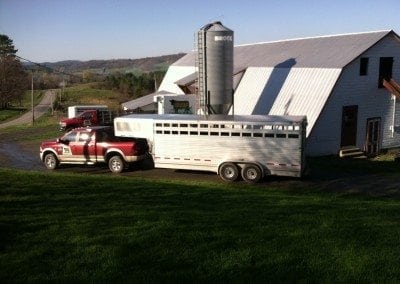
Sides and quarters are delivered by us across New England, eastern New York, Long Island, and northern New Jersey, or picked up at the farm in Benson. Delivery is included in the price. Boxes and bulk ground: Ships frozen by UPS Ground from Vermont, shipping included. One-day delivery to Vermont, New Hampshire, Massachusetts, Connecticut, Rhode Island, New Jersey, eastern New York including the New York City area, and southern Maine. Two-day delivery to Pennsylvania, Delaware, Maryland, Washington DC, Virginia, West Virginia, Ohio, western New York, and northern Maine. We will confirm a window with you so someone is there to help carry it in, a side arrives in more boxes than people expect. Pay by card or ACH through a secure Square link when it ships or is picked up; no cash or checks.
What arrives
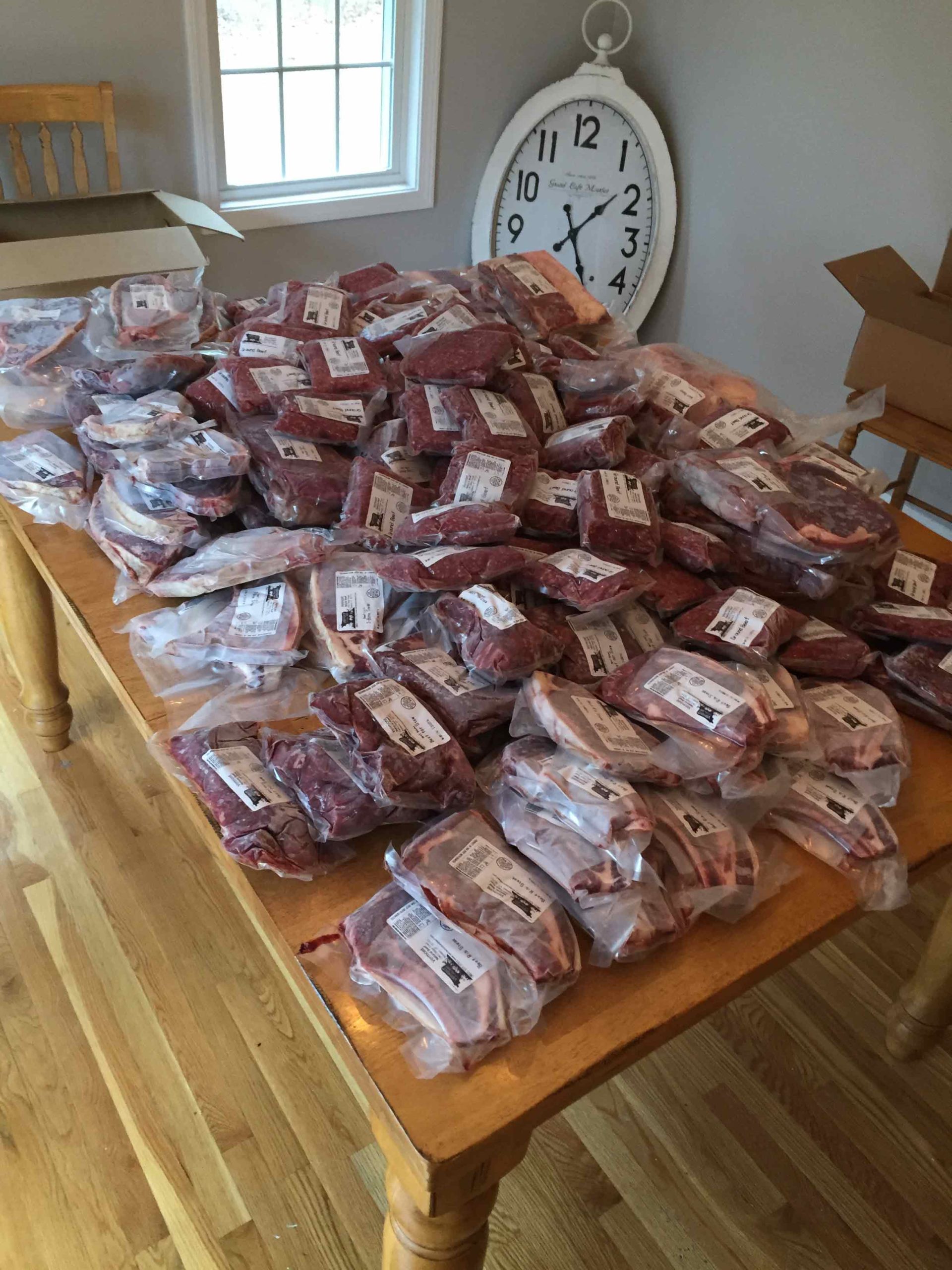
A year of dinners, on one table
Next step
Reserve for this season
Tell us what you are after, a side, a quarter, or a 50 lb ground beef box, and we will follow up with timing and next steps. No obligation until you confirm your reservation.